
As temperatures drop, you might notice your hands and feet getting colder, your energy dipping, and your body feeling slower. That’s not just the weather — it’s your circulation responding to the cold. When the body senses lower temperatures, blood vessels constrict to preserve warmth in vital organs, leaving extremities with reduced flow.
The good news? You can counter this effect naturally. Massage therapy, movement, and daily wellness habits can restore balance and help your body feel alive again — even in the darkest months.
In this article, we’ll explore how massage improves circulation during winter, what natural habits support this process, and how small changes can make a big difference to your comfort and vitality.
Understanding Circulation and the Winter Effect
When it’s cold, your body works overtime to stay warm. Peripheral blood vessels narrow (a process called vasoconstriction), reducing blood flow to the skin and muscles. This can lead to fatigue, muscle tension, or even that “numb” feeling in your fingers and toes.
Massage therapy acts as a natural circulatory booster. Through rhythmic pressure and friction, it stimulates both the venous and lymphatic systems, encouraging oxygen-rich blood to flow back into the tissues. The result? Warmer skin, improved nutrient delivery, and faster removal of toxins.
As Harvard Health explains, good circulation supports heart health and energy levels while helping the body regulate temperature more efficiently. It’s not only about movement — it’s about oxygen flow and cellular vitality.
Therapist Insight & Local Experience
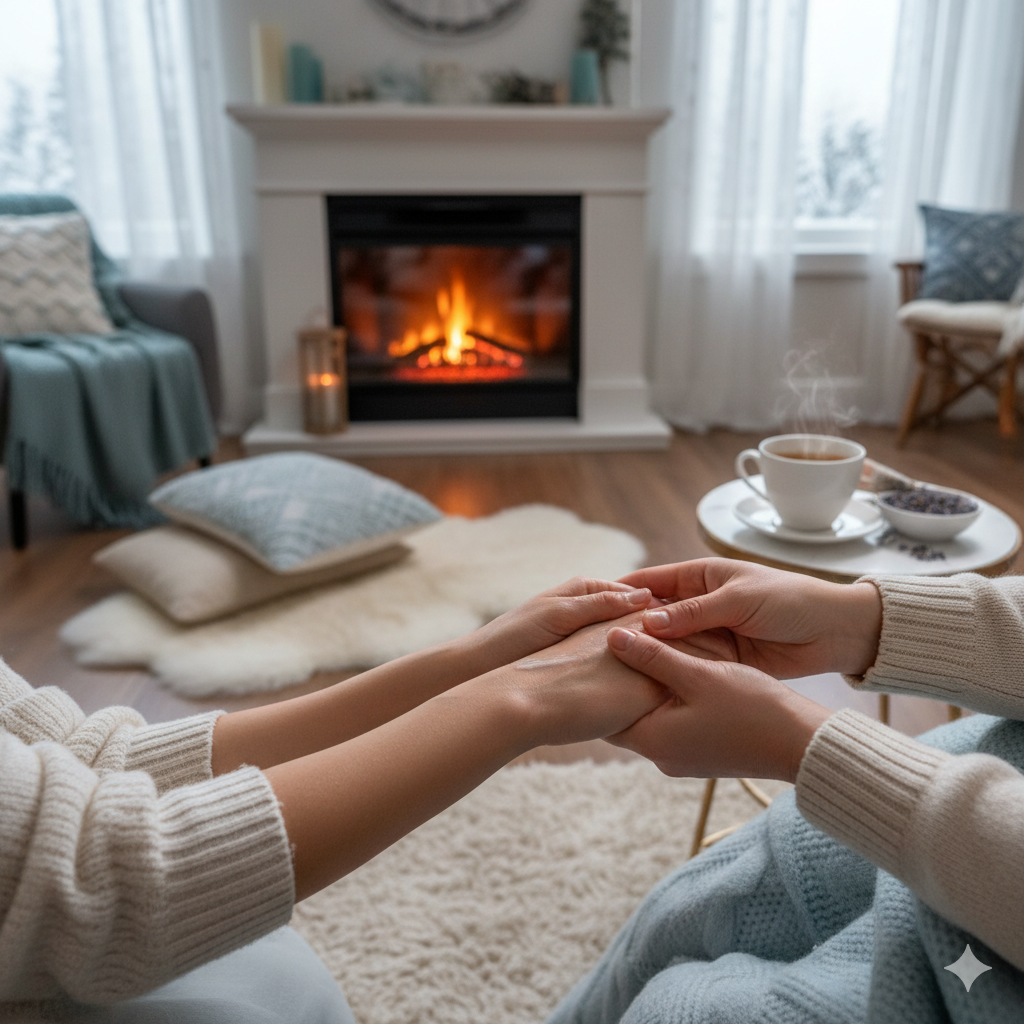
In my Stoke-on-Trent studio, I often meet clients who say, “My hands are always cold, even indoors.” This is one of the most common signs of slowed circulation in winter. With each session, I focus on stimulating blood flow in the extremities through warming oils and specific techniques such as effleurage (long gliding strokes) and friction to gently heat up the tissues.
Massage also works indirectly through the nervous system. By calming stress and tension, it allows blood vessels to dilate again, improving flow naturally.
After just one or two winter sessions, clients often report feeling “lighter” or “more awake,” as if the body has restarted. It’s not magic — it’s physiology. When circulation improves, your entire system performs better: digestion, energy, focus, and even mood.
Related post: Therapeutic Massage in Stoke-on-Trent: Relaxation, Recovery, and Real Results
Holistic Tips for Better Circulation
Massage is powerful, but true wellness is holistic. To enhance circulation daily, combine therapy with simple lifestyle choices that keep your blood moving.
Move every hour. Even light stretching or short walks prevent stagnation. When you move, you push fresh blood through your muscles.
Stay hydrated. Cold weather dehydrates the body — drinking warm water or ginger tea supports blood viscosity and flow.
Eat circulation-friendly foods. Citrus, beets, and dark leafy greens provide antioxidants and nitric oxide, which naturally dilate vessels.
Try warm baths or contrast showers. Alternating hot and cold water improves vascular tone.
Magnesium & omega-3s. These nutrients, found in nuts, seeds, and fish, support vascular elasticity and heart function.
According to PubMed, regular massage can increase peripheral blood flow by up to 30%, proving that consistency brings measurable results.

Client Experience & Real Results
One of my regular clients, a long-distance driver, used to complain that his legs felt heavy and cold during winter. After adding monthly massages and short stretching breaks at work, his energy improved dramatically. “I no longer feel frozen at the end of the day,” he said.
Massage boosts not only blood flow but also lymphatic drainage, which helps reduce water retention and that dull, tired feeling. The NHS also recommends regular movement and warmth exposure to prevent circulatory strain during cold weather.
Over time, clients notice benefits that go beyond warmth: clearer skin tone, better concentration, and fewer tension headaches. Your blood carries life to every cell — when circulation improves, everything else follows.
FAQs
How often should I get a circulation massage in winter?
Every 2–4 weeks helps maintain healthy flow and reduce stiffness.
Which areas benefit most?
Legs, feet, hands, and neck — they’re most affected by poor circulation in cold weather.
Can I combine massage with exercise?
Absolutely. Gentle activity like walking or yoga complements massage perfectly.
What oils help with circulation?
Ginger, black pepper, and rosemary oils promote warmth and stimulate blood flow.
References / Sources
-
Harvard Health. Improving Circulation Naturally.
-
NHS. Cold Weather Health Risks: How Circulation and Heart Are Affected by Winter.
https://www.nhs.uk/live-well/seasonal-health/keep-warm-keep-well/ -
PubMed. Massage Therapy and Peripheral Blood Flow: Evidence-Based Review (2020).
Book Your Massage Today
Looking for a natural way to relax your body, release tension, and restore your inner balance?
Book your massage session today and experience the calm, professional care that helps your body heal and your mind slow down.
Appointments available Monday to Sunday, 10 AM – 7 PM
Mihail Antoniei Massage Therapy
Stoke-on-Trent & Newcastle-under-Lyme
 A Spring Guide to Wellness in Newcastle-under-Lyme: Nature, Light & Simple Living
A Spring Guide to Wellness in Newcastle-under-Lyme: Nature, Light & Simple Living
 From the Ground Up: Minerals, Nutrition & Balance for Daily Strength
From the Ground Up: Minerals, Nutrition & Balance for Daily Strength
 Deep Tissue Massage & Magnesium: The Perfect Duo for Recovery

